
by Rabbi Nachman Kahana | Dec 19, 2018
In the last parasha of the Torah, Zot Habracha, Moshe blesses every tribe, except for one – Shimon; because of their sinful conduct with the Midianite women. The implication was that Shimon would no longer merit a tribal area in the holy land, thus relegating Shimon to irrelevancy in future Jewish history. Rashi relates that Yehuda came to Shimon’s rescue by praying to HaShem and begging Moshe to reconsider his position. Moshe did so, allotting Shimon an enclave within the tribal area of Yehuda consisting of several cities but no wide spaces of land. But at least Shimon retained a degree of relevancy.
by Rabbi Nachman Kahana | Dec 11, 2018
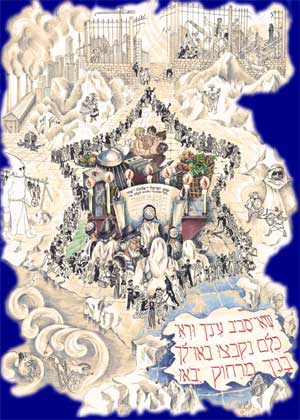
Jews often wonder, “Even now, after returning to our God-given homeland following 2000 years of repression and degradation, why must we still fight for our survival. Rebono Shel Olam – Isn’t enough?”
The answer is an emphatic NO!
I will explain…
by Rabbi Nachman Kahana | Dec 5, 2018
Our family and friends celebrated my wife Feiga’s eightieth birthday (to 120) this week.
Each family wrote blessings to their Imma, Savta and Savta Raba (mother, grandmother and great grandmother), but one letter stands out because it represents the others in content and spirit. It is also special because it encapsulates all of the weekly messages that I have been sending out these past 15 years.
by Rabbi Nachman Kahana | Nov 28, 2018
The central theme of these two parshiot is JEWISH IDENTITY – Ya’akovism vs. Aisavism, or to put it plainly: as with the practice of medicine where wellness is defined as the absence of sickness; in Judaism, Ya’akovism is defined as the absence of Aisavism. And just as a minor illness excludes the sufferer from the status of wellness, even an infinitesimal dose of Aisavism excludes a Jew from the distinctive, unique, sacred, aristocratic status of Ya’akovism.

by Rabbi Nachman Kahana | Nov 21, 2018
In parashat Beshalach (Shemot 17) we read that Amalek attacked the Jews immediately after leaving Egypt. Two questions:
Amalek resided in the area of today’s southern Jordan and in the Negev; how did they come to be so far west in the Sinai Peninsula?
What was their hurry to wage war on the Jews as soon as we left Egypt?

by Rabbi Nachman Kahana | Nov 14, 2018
Ya’akov set out for Lavan’s house to find a wife. Yet unlike Avraham’s servant Eliezer, who dozens of years beforehand had arrived at that same well, with a caravan laden with wealth, Ya’akov arrived empty-handed.


