by Rabbi Nachman Kahana | Jul 12, 2019
Balak’s anti-Semitism was immense, but it had a limit. Bil’am’s hatred knew no limitations, only total annihilation with not one Jew to be left in the world. Bil’am, the man, comprised within himself the two evil forces which are threatening the Jewish nation today. He is the murderous, sadistic Muslim who supported Paro’s suggestion to physically enslave the entire Jewish nation. He is the cursing, venomous voice of the United Nation’s Security Council, the United Nation’s General Assembly, the International Court of Justice, the United Nations Human Rights Commission and the European Union. He is the voice of BDS, of J Street betrayers and traitors, of the “turn-the-other-cheek” Christian Churches – the one in Rome and the others to the East.

by Rabbi Nachman Kahana | Jul 5, 2019
Our parsha begins with the unfathomable ritual of para aduma, the red heifer. The completely red-haired animal is burned on Har Ha’zaytim to the east of the Temple Mount, in direct line with the Holy of Holies, which enabled the officiating Kohen to see into the Holy of Holies.
The Torah informs us that all the people involved in the preparation of the para aduma become tamei (a state of ritual impurity), even though the result of their efforts is the purification of people or objects which became tamei through contact with a corpse.
How strange that the people who are engaged in the purification of others become themselves impure!

by Rabbi Nachman Kahana | Jun 26, 2019
A letter to HaShem from my forthcoming book “Reflections From Yerushalayim”

by Rabbi Nachman Kahana | Jun 13, 2019
There is No Replacement for the Torah or the Land of Israel
Eight times in his commentary on the Torah, Rashi asks, “Why was Section X juxtaposed to the section before it?”
Although this question can be asked about all the sections of the Torah, we can derive from Rashi’s eight sections that they possess a special character.
In the last chapter of Parashat Be’ha’alot’cha, Miriam criticizes her brother Moshe for having divorced his wife Tzipporah. Miriam is severely punished with biblical leprosy.
by Rabbi Nachman Kahana | Jun 5, 2019
Two parshiot, Be’chukotai in Vayikra and Ki Tavo in Devarim, contain the harsh reproach and severe punishments that await the Jewish nation if they violate the eternal covenant entered into with the God of Israel.
Devarim 28, 45-47:
45: All these curses will come on you. They will pursue you and overtake you until you are destroyed, because you did not obey the Lord your God and observe the commands and decrees he gave you.
46: They will be a sign and a wonder to you and your descendants forever.
47: Because you did not serve the Lord your God with simcha and tuv lev (good heart) even in good times.
“Simcha and u’betuv lev” do not refer to simple joy and appreciation. Moshe was referring to the absence of exuberance and enthusiasm when serving Hashem.
by Rabbi Nachman Kahana | May 28, 2019
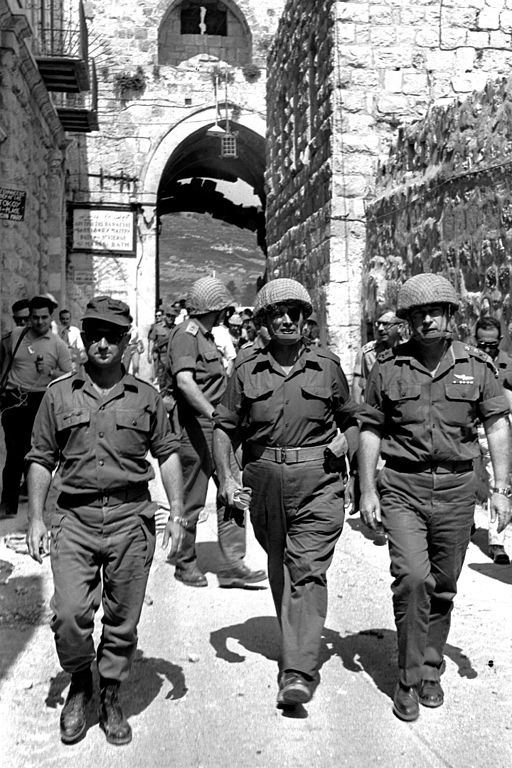
IN HONOR OF THE 52nd YEAR OF RE-UNIFICATION OF YERUSHALAYIM – YOM YERUSHALAYIM
The following is a translation of a composition by Mr. Yitzchak Navon, in honor of Yerushalayim, written when he was serving as our 5th president.
In June 1967, the Six Day War broke out. Israel’s soldiers fought bravely and won many victories. Soon they reached the Old City of Jerusalem. They prepared to fight for it, and to take it back from Jordan. But they did not know through which of the seven gates to enter. As they tried to decide what to do, each gate begged, one louder than the other, “Enter the Old City through me. Enter the Old City through me.”


