by Rabbi Nachman Kahana | Apr 2, 2014
The adverse negative feelings and infighting aroused by the Chareidi understanding of a Torah life and their claims of how evil the Medina is in its efforts to extinguish any and all Jewish religious practice, have become depressingly boring.
The fact is that Medinat Yisrael with its close to 7 million Jews, the majority of whom identify themselves as religious or traditional, is too strong and too entrenched to be shaken by the claims of certain Chareidi leaders that they are now in the worst gulus possible – gulus in the hands of Jews.
The long Jewish journey homeward to resume our glorious history so tragically suspended 2000 years ago, is an historic steamroller which cannot be aborted or deprecated.
As the Beduin saying goes: “The dogs bark and the caravan continues on”.
by Rabbi Nachman Kahana | Mar 26, 2014
The Jewish nation has grown further away from the Sinai experience, and coupled with 2000 years of exile we see within us tell-tale signs of national nega tzaraat of various ideological “colors” and distortions.
As with a blemish where there is uncertainty if it is a nega, and the sufferer must be isolated to see how the blemish develops, so too will be the fate of these two blemishes on our nation’s ethos – the less than religiously observant average Israeli and the disconnected average orthodox Jew in the galut.
When the Mashiach comes he will in all likelihood dispense to each person according to the efforts he expended in enabling the Mashiach’s return. What will become of us? Perhaps a lesson about the Para Adumah might provide some insight.
by Rabbi Nachman Kahana | Mar 19, 2014
Fear of the Jew is a mighty weapon. It is alluded to in the Song at the Sea:
“The nations will hear and tremble; anguish will grip the people of Philistia. The chiefs of Edom will be terrified, the leaders of Moav will be seized with trembling, the people of Canaan will melt away. Terror and dread will fall on them. By the power of your arm —Eretz Yisrael will be petrified as stone, until your people pass by, LORD, until the people you acquired pass by.”
What are the lessons for our time?
by Rabbi Nachman Kahana | Mar 12, 2014
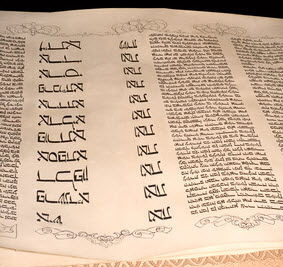
The angel Gavriel disturbed the sleep of Achashverosh because of Mordechai’s prayers, and said to him (Achashverosh) “Ingrate! Reward the man who did you a great service.” Mordechai, the Jew, had saved the king’s life, but had not been rewarded. As we will read in Megilat Esther in a few days, Achashverosh corrects that oversight and demonstrates his appreciation for Mordechai’s actions and wisdom.
Yet of all the many Chareidi yeshivot in Eretz Yisrael, I am quite certain that there is not even one in which the prayer for Tzahal is recited. Where is the hakarat hatov (thankfulness, appreciation, recognition) for the hundreds of thousands of men their age who give three years of their lives to keep our nation safe and the yeshivot open?
by Rabbi Nachman Kahana | Mar 5, 2014
The Gemara explains that King David drafted into his army only the most genealogically and spiritually suitable. David’s logic was that, in war, Hashem weighs the relative merits of the litigants.
How different are our thoughts from those of the great King David. Today’s yeshiva world might be prepared to accept the idea that those who are not learners be drafted, but certainly not the outstanding learners. In contrast, David and his advisors saw the Torah truth to be just the opposite – they knew that the best fighters would be the most gifted talmidei chachamim, bringing with them Torah and mitzvot as the efficient weapons for victory.
by Rabbi Nachman Kahana | Feb 26, 2014
It is superfluous to underscore the painful breach that exists within our society, because the debate and emotions are inescapable.
It is the result of “bad blood” which exists between the sides – “bad blood” because the issue is one of life and death, where one side spills its blood while the other does not. I am referring to the matter of military service for Chareidi yeshiva students. The gap between the sides appears to be at this time irreparable. The learners cannot concede because in their eyes they are fulfilling Hashem’s will that Jews should learn Torah and that their learning is defending the Medina. The earners, on the other hand, cannot perceive that learning Torah in an air-conditioned bet midrash and sleeping every night between two clean sheets is as effective in defending the country as dropping a two-ton bomb from an F-16 in Azza or laying in a mud-filled foxhole on the border in ambush for terrorists who are determined to murder as many Jews as they can.

